Showing posts with label artificial intelligence. Show all posts

Friday, July 12, 2024

Up Your Communication Game: Master Professional Emails with MagicSchool's AI Tool


Struggling to find the right words? MagicSchool's Professional Email Tool can help! Tailor your message to any audience – from irate parents to challenging colleagues – with just a few clicks. This tool generates professional, effective drafts, saving you time and stress. Remember, while AI is a powerful tool, human judgment is essential. Always review and refine the AI's output to ensure your message is exactly right.

Check out the video below for a quick look at MagicSchool's Professional Email Tool. 

This blog post was created with the assistance of AI tools like Google Gemini and Adobe Express. While the concepts and message are mine, these innovative platforms helped me bring them to life.

Don't forget to follow TechCoachJuarez on X (formerly Twitter)InstagramFacebookTikTokLinkedIn and YouTube. If you have any questions and would like a follow up, contact me via Gmail or Chat at ajuarez@techcoachjuarez.com. If you would like to bring me to your school for PD, workshops, a keynote, training or a follow-up on this or previous blogposts, click here to schedule an appointment to chat. 

My book, The Complete EdTech Coach: An Organic Approach to Digital Learning, co-authored with my wife Katherine Goyette is now available on Amazon. Click here to purchase. It is published by Dave Burgess Publishing. Be sure to follow the hashtag #OrganicEdTech and #CVTechTalk for updates.

Wednesday, June 26, 2024

Magic Lesson Plans in Minutes with MagicSchool


Feeling swamped by lesson planning? MagicSchool's AI-powered tool can be your secret weapon! Simply enter your topic, grade level, and standards, and watch a custom plan materialize.

But remember, even magic needs a guiding hand. Review the suggestions with your expert eye - human intelligence is irreplaceable. MagicSchool provides a springboard, not a script.

Don't forget to set the lesson duration (days and minutes) and customize for ELLs and SPED students. With MagicSchool, you can spend less time planning and more time enchanting your classroom!

Check out the video below for a quick look at MagicSchool's Lesson Plan Tool. 


This blog post was created with the assistance of AI tools like Google Gemini and Adobe Express. While the concepts and message are mine, these innovative platforms helped me bring them to life.

Don't forget to follow TechCoachJuarez on X (formerly Twitter), Instagram, Facebook, TikTok, LinkedIn and YouTube. If you have any questions and would like a follow up, contact me via Gmail or Chat at ajuarez@techcoachjuarez.com. If you would like to bring me to your school for PD, workshops, a keynote, training or a follow-up on this or previous blogposts, click here to schedule an appointment to chat.

My book, The Complete EdTech Coach: An Organic Approach to Digital Learning, co-authored with my wife Katherine Goyette is now available on Amazon. Click here to purchase. It is published by Dave Burgess Publishing. Be sure to follow the hashtag #OrganicEdTech and #CVTechTalk for updates.

Thursday, December 14, 2023

Revolutionize Teacher Workflow with Google's NotebookLM

In the dynamic landscape of education, educators are continually in search of innovative tools to elevate their teaching methodologies and streamline their workflows. Google's NotebookLM stands out as a transformative force, presenting a personalized AI collaborator that not only enhances teaching practices but also enables educators to work more effectively and efficiently, making it easier to work within contracted hours. Here are seven impactful ways teachers can leverage NotebookLM to revolutionize their workflow:

1. Effortless Creation of Notebooks

Initiating the journey is as simple as clicking "New Notebook." This uncomplicated step opens the door to a plethora of possibilities. Teachers can seamlessly organize lesson plans, lecture notes, and educational materials within the intuitive interface, establishing the groundwork for an efficient and structured teaching experience.

2. Tailoring Information to Individual Needs

Gone are the days of laboriously sifting through an overwhelming multitude of online resources. NotebookLM liberates teachers, allowing them to concentrate on targeted information that aligns with their preferences. The AI collaborator interfaces with a personally curated dataset, incorporating your notes, files, and resources. This guarantees that educators and their collaborators maintain control over the content, fostering a personalized approach that streamlines the curation of materials essential for more effective teaching.

3. Seamless Integration of Sources for Deeper Insights

With the ability to incorporate Google Docs, PDFs, or copied text, teachers can effortlessly integrate diverse sources into their NotebookLM. The AI collaborator transforms into a robust ally, capable of answering questions, summarizing content, brainstorming ideas, and more. This feature expedites information processing, empowering teachers to delve into deeper insights more quickly and efficiently than ever.

4. Automatic Generation of Summaries and Key Topics

A single click on sources activates NotebookLM's magic, auto-generating summaries and key topics. This feature not only saves time but also provides a rapid overview, assisting teachers in preparing for lectures, discussions, or assessments. The AI's adeptness at distilling complex information into digestible summaries dramatically expedites teacher workflow.

5. Personalized Practice Problems or Questions Across Subjects

Imagine a teacher reviewing assessment data and planning an intervention lesson. After uploading relevant information, NotebookLM takes personalized learning to the next level by generating practice problems or questions tailored to students' understanding. Using uploaded assessment data (minus student identification markers), the AI crafts problems of varying difficulty levels, aligned with teacher-curated resources, offering a customized learning experience for each student. Teachers can then distribute these tailored assessments to students based on their individual learning needs.

6. Engaging Assessments for ELA and Social Studies

Teachers exploring literary works or primary source documents can upload excerpts and lecture notes to NotebookLM. The AI collaborator transforms this content into quizzes featuring open-ended questions about character motivations and themes. These quizzes seamlessly integrate into popular learning platforms like Quizizz or Quizlet, providing students with engaging and insightful assessments.

7. Facilitating Collaborative Curriculum Development

NotebookLM becomes a collaborative hub as teachers working on curriculum development come together. Similar to files in Google Drive, NotebookLM notebooks can be shared with collaborators. The AI assistant streamlines brainstorming sessions, note-taking, and summarization, enabling educators to efficiently share resources, takeaways, notes and lesson plans. This collaborative effort not only saves time but also reveals trends, commonalities, and differences in collective insights and resources.

As Google's NotebookLM becomes accessible to all Google Workspace users, educators are encouraged to explore its potential. While its release is widespread, it's advisable to check with your domain's Admin Console administrator if access is not yet available. NotebookLM empowers teachers to tap into the potential of AI in education, offering personalized information curation, streamlined workflows, and enhanced collaboration. 

Monday, November 6, 2023

CSEdCon 2023: My Takeaways Regarding AI and the Future of Education

Attending CSEdCon was truly an enlightening experience for me. This three-day conference delved into the intricate connections between AI, education, and computer science. As I sat through thought-provoking sessions such as "AI and the Future of Education," "Reaching Rural Regions," and "Early Experiences in Teaching with AI," I found myself deeply engaged in discussions. These dialogues solidified some of my existing beliefs about AI in education while presenting fresh perspectives that broadened my understanding.

A few stand-out observations from the conference include:

  • AI promises to transform the landscape for teachers and software engineers. While it will not replace human expertise, the importance of adapting and capitalizing on AI tools cannot be understated.
  • The growing demand for AI skills is undeniable, emphasizing both technical and interpersonal attributes like communication and ethics. Yet, the gender disparity in AI is concerning and demands immediate attention.
  • AI's potential in refining computational thinking, tailoring learning experiences, and simplifying coding is evident. But challenges, such as inherent biases and inaccuracies, persist.
  • Embracing AI in classrooms has showcased notable benefits, including improved student outcomes. However, there's an underlying risk: if not accessible to all, it might intensify existing inequities.
  • The future of CS education is poised for change. Expect a decline in traditional tasks and languages, like HTML, and a surge in innovative modalities like block-based coding and audio input/output methods.
  • One crucial takeaway is the need to arm students with discerning knowledge about computer capabilities, ensuring they utilize AI with wisdom and responsibility.

As an edtech consultant and advocate, I frequently interact with educators apprehensive about AI's profound impact on education and the world at large. My experience at CSEdCon has equipped me with talking points that can assuage such concerns. For instance:

  • AI's ability to offer personalized, immediate feedback.
  • The automation of routine tasks, granting teachers more quality time for instruction.
  • Engaging AI-powered chatbots that make learning interactive.
  • AI's prowess in assessing student understanding and identifying gaps.
  • Novel brainstorming techniques introduced by AI text generation models.
  • AI-powered 24/7 tutoring systems.
  • The myriad ways students can employ AI for dynamic study materials.

The onset of AI in education marks just the beginning. Our collective task now is to ensure educators recognize its potential. We must guide our students to ethically and effectively wield AI. 

For educators looking ahead, consider these key points:

  • AI is redefining numerous sectors. Acquainting students with AI tools will be instrumental, irrespective of their career paths.
  • Cultivating a robust understanding of AI systems, emphasizing their strengths and flaws, is crucial.
  • Encouraging students to discern potential AI biases ensures ethical engagement.
  • As AI handles routine chores, honing soft skills in students becomes paramount.
  • Recognizing the soaring demand in AI-centric roles can shape future academic curricula.
  • With AI knowledge becoming a staple in most professions, disregarding its importance may jeopardize students' future employability.
  • While predicting AI's trajectory is challenging, imparting foundational principles to students ensures they remain agile and adaptable in a dynamic future.
This blog post was developed with the support of AI tools, including OpenAI's ChatGPT and Anthropic's Claude. After inputting my notes from CSEdCon into Claude, it helped me identify key takeaways and insights. With ChatGPT, I underwent several iterations to organize and refine these insights into a blog post tailored for educators. The collaborative process with these AI tools not only streamlined my thoughts but also emphasized the importance of refining and iterating for clarity, especially for a specific audience.

Friday, November 3, 2023

The Limitations of Generative AI LLMs: A Personal Example


In today's digital realm, generative AI Language Models (LLMs) like ChatGPT by OpenAI and Google Bard have become focal points of discussion. These models, equipped with the ability to craft human-like text, offer a myriad of applications. Yet, understanding their constraints remains paramount.

It's crucial to grasp that these models don't genuinely "think." They generate text by mimicking human language patterns from vast datasets, not from comprehension or consciousness. Contrary to popular belief, LLMs don't actively "search" the internet for real-time answers. They've been trained on extensive data, but they don’t browse the web live. Faced with unfamiliar topics, they make educated guesses based on previous patterns.

Let's turn to a personal experience. I'm an avid supporter of Fresno State Football, and my YouTube channel boasts four decades of game footage and highlights. Leveraging AI, I've crafted game recaps and summaries for each video description. An observable trend is that the AI's accuracy correlates with a game's media coverage. The more widespread the reporting, the more accurate the AI summary, although my expertise often catches occasional inaccuracies.

A case in point is a recap I requested from Google Bard for the 1986 NCAA Football game between Fresno State and University of Nevada-Las Vegas (UNLV). While the game had national coverage, it didn’t dominate ratings and missed many viewers and journalists, especially outside the Pacific time zone. During this engagement, Bard's recap showed marked inaccuracies. 

For example, in paragraph 1, Bard inaccurately labeled the game's conference as the Big West Conference. In 1986, both schools were part of the Pacific Coast Athletic Association (PCAA), which later was rebranded as the Big West in 1988. Furthermore, in paragraph 3, Bard mistakenly identified Jeff Tedford as Fresno State's quarterback for that game, even though he had vacated the position in 1982. Another error was with respect to UNLV's Ickey Woods and Charles Williams. While Woods was mischaracterized as the quarterback, he actually played as a running back. Intriguingly, Charles Williams, who began playing in 2017, was incorrectly cited in the 1986 account. A notable tidbit is that both Woods and Williams hail from Fresno.

These oversights illuminate AI’s tendency to piece together plausible, quasi-relevant information when faced with data gaps. The tidbits about the conference, Jeff Tedford, Ickey Woods and Charles Williams are all "semi-in-the-ballpark" information. It’s as if you threw a ball for a dog, and it earnestly brought back a stick; close, but not quite accurate.

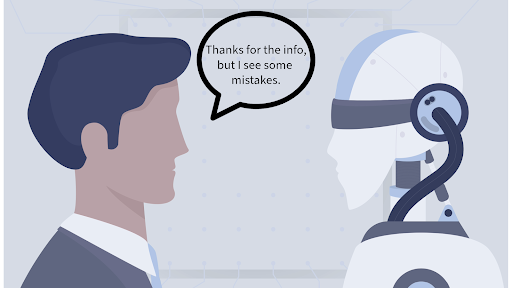
The underlying message here is the imperative of scrutinizing AI outputs. LLMs, while powerful, can occasionally deliver out-of-context or misleading information. Critical assessment of AI responses is as essential as vetting any unfamiliar source.

Generative AI LLMs, revolutionary as they are, come with their set of challenges. Approaching their outputs with discernment is vital, especially in education. Teachers should rigorously vet AI-derived content, and students must be taught to assess the reliability of AI-generated information. In doing so, we foster a balanced approach, benefiting from AI while upholding the veracity of the information at hand.

Monday, August 21, 2023

MagicSchool Tools: A dozen ways it can help educators


In an ever-evolving educational landscape, the search for effective teaching tools never ceases. Teachers today face the challenge of not only adjusting pedagogy for diverse learners, but also keeping up with the rapid technological shifts. Enter MagicSchool Tools, a cutting-edge artificial intelligence (AI) tool developed specifically for educators. This platform is the one-stop shop educators never knew they needed.

MagicSchool Tools helps educators expedite their laborious tasks, allowing more time for the human aspects of teaching and learning. Remember, AI tools are only as effective as the human input they receive. Vet all AI output before utilizing it.

Here are a dozen ways in which MagicSchool Tools can help.

  • Student Work Feedback Tools: Manually checking student work taking tool long? MagicSchool Tools' Student Work Feedback tool helps educators to more quickly analyze student work and provides instant, tailored feedback, ensuring personalized learning. 
  • Lesson Plans & Academic Content: With a few clicks, educators can generate lesson plans tailored to their standards, classroom's needs, complete with academic content that's up-to-date and engaging.
  • Unit Plans & Syllabus Generator: Planning for the entire year? These tools can generate unit plans, and even a full syllabus, streamlining the process.
  • Diagnostic Assessments: It aids in identifying student strengths and areas for improvement, paving the way for targeted instruction.
  • Interactive Learning: From ice breakers and team-building activities to the 5E model science lesson plans, learning becomes a fun and interactive experience.
  • Assessment & Feedback: Rubrics, spiral reviews in math, and even 3D science assessment generators make both teaching and grading more efficient.
  • Communication Tools: The 'Email Parents Tool' and class newsletter generator allow for seamless communication with parents.
  • IEP Accommodation Suggestions: With the IEP suggestion generator and accommodation tool, educators can ensure that every student gets the attention they deserve.
  • Diverse Learning Tools: From vocabulary lists and reading quizzes to SAT practice test generators, the tool covers a wide spectrum of academic needs.
  • Behavioral Intervention: Both behavioral intervention generators and restorative reflection tools provide solutions to manage classroom behavior effectively.
  • Advanced Analytical Tools: Data table analysis and text analysis assignment tools assist educators in delving deep into content and drawing meaningful conclusions.
  • Recommendations & Responses: Writing letters of recommendation or responding to emails is made effortless with MagicSchool's dedicated tools.

MagicSchool Tools is captivating not only due to its vastness but also its depth. Each tool is crafted with the unique obstacles educators encounter in mind, augmenting the efficiency, personalization, and interactivity of the entire teaching and learning process. Moreover, these tools align with FERPA regulations and reject non-educational prompts. Remember that these tools do possess restrictions. They might generate biased or unreliable data. Their dataset is current until 2021 and does not yet support web searches or image production. This highlights the significance of scrutinizing the resources and information they provide. Despite these constraints, MagicSchool AI Tools can greatly expedite any educator's workflow.

If you would like to bring me to your school for PD, workshops, a keynote, training or a follow-up on this or previous blogposts, click here to schedule an appointment to chat. My book, The Complete EdTech Coach: An Organic Approach to Digital Learning, co-authored with my wife Katherine Goyette is now available on Amazon. Click here to purchase. It is published by Dave Burgess Publishing. Be sure to follow the hashtag #OrganicEdTech and #CVTechTalk for updates.

Saturday, July 29, 2023

Expediting Your Workflow with Claude.AI: Spreadsheets, CSV Files & Analysis of Student Data


If you're constantly sifting through mounds of data, Claude.AI can help you revolutionize your workflow. This AI tool allows you to upload your data from spreadsheets in the form of CSV files, which can exponentially speed up your student data analysis process.

Traditional data analysis methods can be time-consuming, requiring hours or even days of manual processing. However, Claude.AI's CSV file upload feature helps to eliminate some of the pain points in this task. With just a few clicks, you can input all your data and have it ready for immediate analysis.

Utilizing artificial intelligence, Claude.AI dives into the numbers to identify trends and patterns that might not be immediately apparent to the human eye. This can help you identify recurring problem areas that could benefit from more focused attention. Claude.AI’s in-depth analysis provides crucial insights into these questions, taking some of the guesswork out of your strategy.

Importantly, this doesn't mean that Claude.AI is replacing the human touch. On the contrary, it is augmenting our ability to sift through data more efficiently and effectively. It provides a foundation, an insightful starting point upon which we can then build our strategies. However, it is essential to vet the information that AI provides.

If the initial data analysis and trends provided by Claude.AI are not as focused or in-depth as you like, you can continue the conversation with the chatbot by providing a more detailed follow-up prompt. Remember, Claude.AI will automatically refer back to the spreadsheet you uploaded when providing future analysis and answers within the same conversation thread.

Despite the complex algorithms and machine learning behind Claude.AI, the software is not infallible. As such, it is paramount to remember that anything produced by AI tools should be reviewed by a human. This is a collaboration of sorts, with AI doing the heavy lifting of sorting through mountains of data at lightning speed, and humans applying their expertise and intuition to verify and interpret the insights.

Ultimately, Claude.AI serves as a powerful ally in data analysis, expediting your workflow while enhancing your ability to analyze student data. It is a fine example of how technology can work hand in hand with humans to increase productivity, provide deeper insights, and drive more informed decision-making in the world of education.

For further inquiries or any questions you may have, feel free to reach out to me via Gmail or Chat at ajuarez@techcoachjuarez.com. If you're interested in bringing my expertise to your school for professional development (PD), workshops, keynote speeches, training, or follow-ups on this or prior blog posts, please schedule an appointment here.

I'm delighted to share that my book, 'The Complete EdTech Coach: An Organic Approach to Digital Learning', co-authored with my wife Katherine Goyette, is now available for purchase on Amazon. You can secure a copy by clicking here. Stay tuned for further updates and insights by following the hashtags #OrganicEdTech #WeAreCUE and #CVTechTalk on social media. 

This blog post was written with the help of ChatGPT, Claude.AI, Adobe Firefly and Google Bard.